The gentle folk of Middle England must have spat out their cornflakes a fortnight ago when confronted with a Daily Mail headline reading: "Major trial links Frankenfoods to cancer dangers".
Illustrated with a photo of an anti-GM protester dressed as the Grim Reaper, the article began: "Eating a GM food diet over a lifetime can cause breast cancer, severe organ damage and early death, according to a scientific study."
The study in question was carried out by a team led by Gilles-Eric Seralini, professor of molecular biology and co-director of the unit on multidisciplinary risks, quality and sustainable environment at the University of Caen in France, and was published in the Elsevier journal Food and Chemical Toxicology.
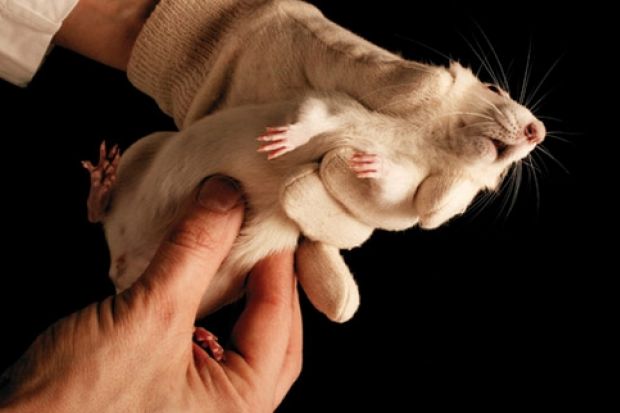
The paper, "Long term toxicity of a Roundup herbicide and a Roundup-tolerant genetically modified maize", claimed that rats fed for two years with a form of maize that had been genetically modified to be resistant to a particular weedkiller were several times more likely to develop lethal tumours and incur severe liver and kidney damage than those fed on standard wheat. The effect was also observed when the rats drank water containing the weedkiller.
According to the Mail, "scientists" believed the results "raised serious questions about the safety of GM foods". Michael Antoniou, reader in molecular genetics and head of the Nuclear Biology Group, King's College London, was quoted as saying that he was "shocked by the extreme negative health impacts" reported in the study.
Only those resolute enough to read as far as the last three paragraphs of the 22-paragraph story would have encountered any quibbles. Anthony Trewavas, professor emeritus at the University of Edinburgh's Institute of Molecular Plant Sciences, was quoted as saying that the number of rats involved in the study was too small to draw any "meaningful" conclusions. He also described Professor Seralini as an "anti-GM campaigner".
Most scientists unimpressed
But this comment was the mere tip of an iceberg of frosty reactions to the paper gathered from scientists by the UK's Science Media Centre and circulated to journalists. Concerns centred around Professor Séralini's statistical approach, selectivity with data and images, and choice of a strain of rat known to be prone to tumours.
Tom Sanders, head of the diabetes and nutritional sciences division at King's College London, said it looked like the paper's authors had "gone on a statistical fishing trip".
David Spiegelhalter, Winton professor for the public understanding of risk at the University of Cambridge, added: "The methods, statistics and reporting of results are all well below the standard I would expect in a rigorous study."
Even Food and Chemical Toxicology's former editor, Alan Boobis, professor of biochemical pharmacology at Imperial College London, expressed reservations.
Fiona Fox, chief executive of the Science Media Centre, insisted that the centre had not deliberately targeted pro-GMO scientists when eliciting responses. "No one would be happier than us if this paper had shown real effects because it would have been the biggest story in a decade," she said.
But she took pride in the fact that scientists' emphatic thumbs down had largely been acknowledged throughout UK newsrooms: apart from the Mail, only The Daily Telegraph and the Financial Times covered the story in their print editions - and both used quotes supplied by the Science Media Centre. She had also heard that several television news programmes had also rejected the story after reading the quotes.
Ms Fox took this as evidence that the 10-year-old centre was fulfilling its remit to prevent a repeat of incidents such as the uncritical reporting in 1998 of the claim - heavily criticised by the scientific community - made by Árpád Pusztai, a former researcher at the Rowett Research Institute in Aberdeen, that rats fed on GM potatoes had stunted growth and a repressed immune system.
She said that the relatively muted coverage in the UK contrasted with how the story was reported in other countries, particularly France, where it was "front-page news everywhere", prompting the French government to launch an inquiry into the study's findings.
According to Ms Fox, the Science Media Centre's ability to gather a lot of expert comment quickly was particularly valuable in this instance because journalists who were shown the paper in advance of its publication were required to sign a highly unusual agreement that prevented them from sharing it with third parties. Critics claimed that this minimised the time journalists had to gather potentially negative commentary.
Stand by for (book) launch
The press liaison for the paper was also handled by an unlikely source: the Sustainable Food Trust. In a statement, the trust said the terms of the embargo had been dictated by the Committee for Research and Independent Information on Genetic Engineering (CRIIGEN), a Caen-based non-profit organisation whose scientific council features Professor Seralini as president and Professor Antoniou as a member.
The committee's aim is to supply "scientific counter-expertise to study GMOs, pesticides and impacts of pollutants on health and environment, and to develop non-polluting alternatives".
A spokesman for the committee said: "An embargo is needed for any research published." He denied that the paper's release was timed to coincide with the late-September publication of Professor Séralini's book Tous Cobayes! OGM, Pesticides, Produits Chimiques, which translates as (We Are) All Guinea Pigs! GMO, Pesticides, Chemical Products.
The Sustainable Food Trust agreed that "due to the sensitive nature of the research outcomes, any leak might jeopardise their subsequent publication". It said it believed the paper would make "an important contribution to the debate" about GMOs and herbicides, and noted that it "had been peer-reviewed for publication in a respected journal".
But that publication is regarded by some scientists as a demonstration of the fallibility of peer review. Professor Spiegelhalter noted the Mail's claim that peer review guaranteed that "the experiments were properly conducted and the results are valid". "Any scientist who has been subject to the vagaries of peer review knows this 'guarantee' to be nonsense," he said.
Show your work
Maurice Moloney, institute director and chief executive of Rothamsted Research, an agricultural research station funded by the Biotechnology and Biological Sciences Research Council, said the paper would "need to undergo another round of peer review", but that would be possible only if Professor Seralini released all his data. An online petition calling on him to do so had garnered nearly 600 signatures within less than a week of the paper's publication.
The editors of Food and Chemical Toxicology, which has a relatively low impact factor of 2.999, did not respond to invitations to comment.
Both the Sustainable Food Trust and CRIIGEN have posted detailed responses to the criticisms on their websites.
Professor Seralini dismissed most of the concerns as "non-serious, erroneous, false or stupid". He told Times Higher Education that he was surprised by the "violent and rapid [reaction] by scientists" and questioned the motives and expertise of his detractors, adding that most of them "have not published any peer-reviewed scientific papers on mammalian or human pathophysiological and toxicological studies".
He said his study was "the most comprehensive lifelong mammalian toxicological study ever performed on an agricultural GMO and a pesticide in formulation with its adjuvants", and had used the same experimental design as a previous, shorter safety study conducted by the GM maize's manufacturer.
"If 10 rats is a too small number per group to [draw conclusions about] safety, then the [GM maize] and most agricultural GMOs should be forbidden," he said.
Register to continue
Why register?
- Registration is free and only takes a moment
- Once registered, you can read 3 articles a month
- Sign up for our newsletter
Subscribe
Or subscribe for unlimited access to:
- Unlimited access to news, views, insights & reviews
- Digital editions
- Digital access to THE’s university and college rankings analysis
Already registered or a current subscriber? Login